California vs. Texas: A Split Approach to K–12 Lab Safety

By Safer STEM Team
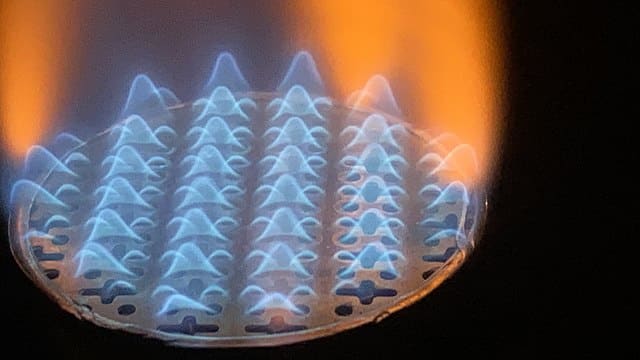
The Bunsen burner doesn’t care where it’s lit. But liability does.
Across the United States, science labs are where curiosity meets combustion, where students explore the frontiers of chemistry, biology, and physics. But behind every hands-on lab lies a hidden ecosystem of safety infrastructure , legal obligations , and teacher responsibility .
Nowhere is the contrast sharper than in California and Texas , two STEM education powerhouses, operating under fundamentally different safety models .
California: Legalized Safety Under Cal/OSHA §5191
California is the only state that applies 29 CFR 1910.1450 , the federal OSHA Lab Standard, to K–12 education through California Code of Regulations §5191 . That means science safety isn’t an add-on. It’s legally required .
Every public school district must:
- Maintain a Chemical Hygiene Plan (CHP) per §5191
- Appoint a Chemical Hygiene Officer (CHO)
- Provide staff training in chemical hazard recognition and response
- Equip labs with ANSI/ISEA Z87.1 D3 2020 certified goggles , non-latex/nitrile gloves , ANSI Z358.1 eyewash and shower stations , and functional engineering controls
- Undergo county-level inspections and respond to deficiencies
Strengths
- Codified compliance protects both students and staff
- Professional oversight ensures safety is managed, not improvised
- Risk assessments and inspections support continuous improvement
- Systemic responsibility spreads accountability beyond individual teachers
For example , in San Bernardino County, a chemistry teacher preparing for a titration lab must verify the eyewash station functions per ANSI Z358.1 and that the Chemical Hygiene Plan has documented the use of PPE, including non-latex/nitrile gloves for acid handling.
Weaknesses
- Equity gaps : Underfunded districts may lack CHOs or certified eyewash stations
- Implementation burden : Teachers and admin must stay updated on regulatory shifts
- Limited injury data transparency : No statewide system exists to track science lab incidents
Texas: Safety Framed Through Instructional Standards (TEKS)
In Texas, science safety is embedded in curriculum, not law. The Texas Essential Knowledge and Skills (TEKS) require students to:
- Practice safer lab procedures
- Use PPE appropriately
- Demonstrate emergency and waste response readiness
However, TEKS is not enforceable as workplace safety regulation . There is no statewide requirement for CHPs, CHOs, or ANSI-standard lab equipment.
Strengths
- Safety is student-facing : Teachers explicitly teach it across grade bands
- Local flexibility : Districts like Austin ISD and Frisco ISD create robust internal systems
- Pedagogical alignment : Safety can be naturally woven into instructional routines
For example , a physics teacher in Travis County may teach Newton’s Third Law through balloon rockets, guiding students in wearing goggles, but there’s no legal requirement to verify those goggles meet ANSI/ISEA Z87.1 D3 2020 specs or to maintain a CHP.
Weaknesses
- No formal responsibility structure : The absence of CHPs and CHOs means safety often defaults to individual teachers
- Uneven resource access : Eyewash stations, PPE, and fume hoods vary widely between districts
- Higher liability risk : Without formal documentation or training requirements, teachers face increased personal exposure if something goes wrong
Side-by-Side Comparison
| Category | California (CCR §5191) | Texas (TEKS) |
| Legal Authority | Cal/OSHA §5191 (state-mandated) | TEKS (instructional, not regulatory) |
| Chemical Hygiene Plan (CHP) | Required | Optional |
| Chemical Hygiene Officer (CHO) | Required | Optional |
| PPE Standards | Required (ANSI Z87.1 goggles, nitrile gloves, etc.) | Encouraged, not enforced |
| Eyewash/Shower (ANSI Z358.1) | Required and inspected | Often missing or outdated |
| Engineering Controls | Fume hoods, ventilation required | Discretionary |
| Safety Training | Mandated under §5191 | Local decision |
| Student-Focused Safety Ed | Variable | Required under TEKS |
| Legal Liability | System-shared | Often teacher-borne |
Key Takeaways for Leaders
1. Safety Isn’t Just Compliance; It’s Culture
A school may appear “compliant” but still be unsafe if:
- Goggles don’t meet ANSI Z87.1 D3 2020 standards
- Eye wash stations haven’t been tested in years
- Students aren’t taught how to perform risk assessments
- Non-latex/nitrile gloves are unavailable during biological labs
To create safer learning environments , safety must be a lived practice, not a form signed during onboarding.
2. Policies Shape Practice and Responsibility
California’s §5191 structure clarifies who is accountable. In Texas, without state-level requirements, policy ambiguity often translates into personal liability . That’s why district-level policies, procedures, and professional development are essential.
3. “If You Don’t Train, You Can’t Claim”
Without documented training, even well-intentioned teachers are vulnerable. In California, failure to follow CHP protocol could trigger OSHA citations. In Texas, the absence of any CHP can shift all legal burden to the teacher.
What Needs to Change
In California:
- Fund compliance supports in low-income districts
- Build a centralized science lab incident dashboard
- Embed safety deeper into NGSS-aligned pedagogy
In Texas:
- Mandate CHPs and CHOs for all public districts
- Require routine PPE and equipment inspections
- Integrate safety compliance into educator certification
Final Word: Build the System Before You Strike the Match
California builds safety through compliance. Texas builds it through curriculum. But neither is fully prepared for what lies ahead.
If we want labs to be safer and science instruction to thrive, both states must do more, not just to meet requirements, but to protect people.
Want to evaluate your district’s readiness under TEKS or CCR §5191?
Contact Safer STEM for a complimentary science safety audit, Chemical Hygiene Plan review, and TEKS-aligned training tools.
- Call Our Safety Specialists: 833-327-2337
- Email Us: support@saferstem.com
- Schedule a Free Consultation
#SaferSTEM #STEMEducation #CCR5191 #TEKS #ChemicalHygiene #PPE #K12Science #NGSS #NSTA #OSHA #NIOSH #NFPA #ACS #CTE #HighSchoolLabs