CSSS Elementary School Science Safety Manual

A nationally aligned safety manual supporting sound professional judgment, developmental alignment, and safer hands-on learning in U.S. elementary schools.

sand activity kindergarten (1)

Brought to you by trusted organizations

This manual was developed through a collaborative effort led by Safer STEM, bringing together nationally recognized expertise in science safety, education, and implementation. The Council of State Science Supervisors, Rutgers University, and Ward’s Science played a critical role in both the development and rigorous peer review of this compliance sheet, ensuring it is accurate, relevant, and grounded in real-world practice.


Safer STEM logo

The Council of State Science Supervisors (CSSS) Elementary School Science Safety Reference Manual reflects a fundamental shift in how safety is understood, implemented, and sustained. Led by Safer STEM, these updated manuals establish a modern, research-based foundation for safer teaching and learning, aligned to today’s realities.

Access the other 2026 CSSS Manuals

chemical cabinets in science lab. Photo used in Science Supervisor Certification Training

CSSS High School Science Safety Manual

A practical, standards-aligned guide that helps high school science educators and leaders make confident, day-to-day decisions to reduce risk, strengthen safety culture, and support hands-on learning across all science disciplines.

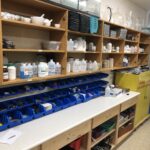
Science Lab with shelving and cart

CSSS Middle School Science Safety Manual

A clear, research-informed resource that equips science educators and leaders to anticipate hazards, apply safer practices, and create consistent, high-quality safety experiences in middle school instructional spaces.

CSSS High School CTE Safety Manual

A comprehensive, standards-aligned resource that equips high school CTE educators and safety leaders to manage complex, real-world hazards through proactive risk assessment, industry-informed safety practices, and a culture of accountability that prepares students for both workforce readiness and safer learning environments.

young student working on a laptop

CSSS Remote, Distance, and Home-based Science and STEM Safety Guidance

A nationally aligned, standards-based framework that guides educators and school leaders in designing safer science and STEM learning experiences beyond the classroom, prioritizing hazard elimination, clear instructional boundaries, and defensible decision-making to ensure that rigorous learning continues without exposing students to unmanaged risks in remote, distance, and home-based environments.

Preparing STEM Instructional Spaces for the Next Pandemic

A forward-looking, evidence-based guide that helps K–12 educators and safety leaders embed public health readiness into everyday STEM instruction, integrating infection prevention, laboratory safety, and instructional design into a cohesive system that protects students, sustains hands-on learning, and strengthens resilience for future pandemics and public health disruptions.

Augmenting Safety with Better Decisions

A research-informed, nationally aligned framework that reframes safety culture in K–12 science and STEM not as compliance alone, but as a system of decisions, equipping educators and leaders with AI-supported tools, cognitive strategies, and design principles to improve judgment, respond to changing conditions, and build defensible, learning-centered safety practices that continuously reduce risk and strengthen professional responsibility.