The Shift Away from Hands-On Science Is Stalling Innovation

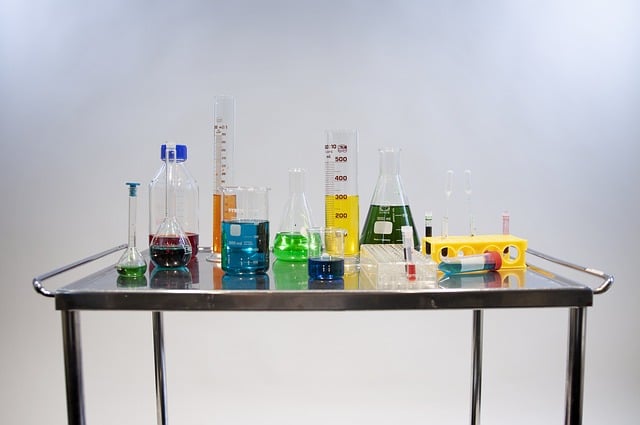
By the time Mia arrived in her first college chem lab, she’d aced every online simulation. Then the beaker wasn’t clickable. The pipette dripped. The Bunsen burner hissed. Her carefully rehearsed digital procedures unraveled into shaky hands, fogged goggles, and a TA stepping in to salvage both the titration and her confidence. Multiply Mia by thousands and you see the quiet hidden educational crisis: a generation trained to watch science, not do science, arriving at college brilliant on-screen, tentative and unprepared at the real lab bench.
Why the Pivot to Simulations Happened (and Why It Stuck)
Let’s be clear: simulations are powerful tools. They reduce costs, standardize experiences, and let students “rewind” complex phenomena. But the U.S. didn’t lean on them only for pedagogy. We pivoted because new teachers, chronic staffing shortages, and liability fears collided with shrinking budgets and aging facilities. A national teacher shortage has been especially acute in math and science; large numbers of new hires enter the profession underprepared, which makes high-risk, hands-on labs less likely to happen consistently or confidently.
Meanwhile, highly publicized lab accidents, most infamously the methanol “rainbow” flame test, prompted urgent warnings from federal and professional bodies. The U.S. Chemical Safety Board has repeatedly urged schools to follow strict guidance for demonstrations using flammable liquids after multiple serious injuries, reinforcing a culture of “avoid the mess” rather than “engineer the risk down.” The American Chemical Society’s Committee on Chemical Safety went further: stop the rainbow demo on open benches because it presents “an unacceptable risk of flash fires and deflagrations.”
District insurers and school system risk managers heard the message loud-and-clear. Add in pandemic-era disruptions coupled with ed-tech investments, and simulations became the default science environment in too many places, especially where new teachers, oversized classes, and limited safety infrastructure make real labs feel out of reach.
What We Lose When Science Goes Screen-Only
Research and policy bodies have long argued that hands-on lab investigations are essential to learning science. The National Research Council’s America’s Lab Report concluded that lab experiences, when thoughtfully integrated, deepen understanding of content and scientific practices. NSTA echoes that “laboratory investigations are essential for the effective teaching and learning of science,” connecting practical science lab experience to inquiry, analysis, and design —- capacities that simulations alone rarely cement. This is a large part of the problem with using only simulations to teach conceptual understanding.
Here’s the rub: simulations can be used to strengthen conceptual grasp and offer a safer rehearsal space. Studies show students can build skills and attitudes through virtual environments, but they are best as supplements, not substitutes. You don’t learn actual lab dexterity, spatial awareness, or the feel of genuine heat and viscosity through a browser window. You can’t practice the micro-moves and accepted lab techniques (e.g., venting a reagent bottle, managing condensate, aligning a meniscus, troubleshooting a finicky sensor) without having the actual science equipment, apparatus and materials in your hands.
College faculty can clearly see the gap that exists today. They describe first-year students who can describe Le Châtelier’s principle verbatim yet flinch with trepidation lighting a gas burner; who can diagram error propagation exceptionally well, but struggle to steady a burette in a clamp on a retort stand. That isn’t a student problem; it’s a system design problem with severe and significant consequences.
Liability Isn’t an Excuse; It’s a Design Constraint
Here’s the good news: we don’t have to choose between safer and hands-on scientific activities. We have legal safety standards, checklists, and engineering controls that make tactile science responsible and durable. NSTA and NSELA’s position on laboratory safety frames the duty of care clearly: teachers must anticipate hazards and minimize risks during practical hands-on learning investigations, with proper laboratory facilities, appropriate safety training, and administrative supports. OSHA’s Laboratory Standard (29 CFR 1910.1450) sets expectations for a Chemical Hygiene Plan, hazard communication, and protective equipment, all principles widely applied in academic labs even where not legally mandated. Professional guidance around combustible demonstrations, especially methanol, gives schools a blueprint to replace high-risk theatrics with instructionally-rich, lower-risk experiences to demonstrate the same curricular objectives and outcomes.
As one NSTA statement puts it, our science labs let students “interact directly with natural phenomena…using tools, materials, data collection techniques, and models”, a crisp reminder that doing science is the point. We should consider using ‘science’ as a verb since it truly is an action word.
Five Moves That Bring Real Labs Back Responsibly
1) Build a real Chemical Hygiene culture. Adopt and enforce a living Chemical Hygiene Plan: accurate chemical and material inventories, SDS access, documented safety training, and ongoing incident reporting. Pre-lab hazard analyses become routine, not special. (OSHA Lab Standard guidance) Responsible chemical and lab management needs to become more mainstream concepts amd routines in our schools.
2) Engineer the risk down. Use microscale and small-quantity approaches, closed systems, and safety shields. Retire high-hazard demos in favor of safer analogs or videos where risk can’t be responsibly controlled. (CSB and ACS guidance) There are always ways to mitigate risks and still provide learning opportuntiies in a safer manner using a hazard analysis and risk management approach.
3) Equip every activity with real PPE and emergency readiness. For chemical handling: ANSI/ISEA Z87.1 D3 2020 indirectly vented chemical splash goggles; non-latex/nitrile gloves for chemicals and biologicals; insulated gloves for hot/cold work; lab coats/aprons as appropriate. Verify access and weekly checks for ANSI Z358.1 eyewash and drench showers. (Best-practice standards widely referenced in school-lab safety)
4) Invest in people, not just products. Teacher shortages are real; many new science teachers are underprepared for lab leadership. Districts should fund mentoring, provide release time for lab setup, provide appropriate onboarding in using hazard and risk controls, and class-size caps that allow true line-of-sight supervision. Over-crowding is a preventable hazard in our schools and a leading cause of accidents and injuries in our science labs.
5) Use simulations strategically. Keep the best of digital (e.g., pre-labs, concept modeling, error analysis, and “what-if” iterations), then transition students into physical labs where they apply and test those ideas. This blended approach is where virtual tools shine and enhance student learning while facilitating teacher instruction.
The Innovation Angle: Why This Matters Beyond the Classroom
Hands-on lab competence isn’t just a K–12 metric; it’s part of the national R&D pipeline. Industries from biopharma to clean energy need college graduates who can calibrate instruments, maintain sterile lab techniques, troubleshoot sensors, and interpret messy, real-world data. That muscle memory is forged in high-school labs that run often, well, and safely. When we offload too much to screens, we defer the learning curve to freshman year, and that’s where attrition spikes.
A Better Default: Curiosity + Caution
The U.S. doesn’t need to abandon simulations; it needs to reposition them in our approach to teaching fundamental science to our youth. Use these digital resources to prime thinking, widen access, and reduce specific hazards, then put real materials in students’ hands under modern safety protocols and supervision. The question isn’t whether we can afford hands-on labs. It’s whether we can afford a generation of future scientists who meet the physical world for the first time at 18.