The One Safety Feature That Could Save a Student’s Eyes

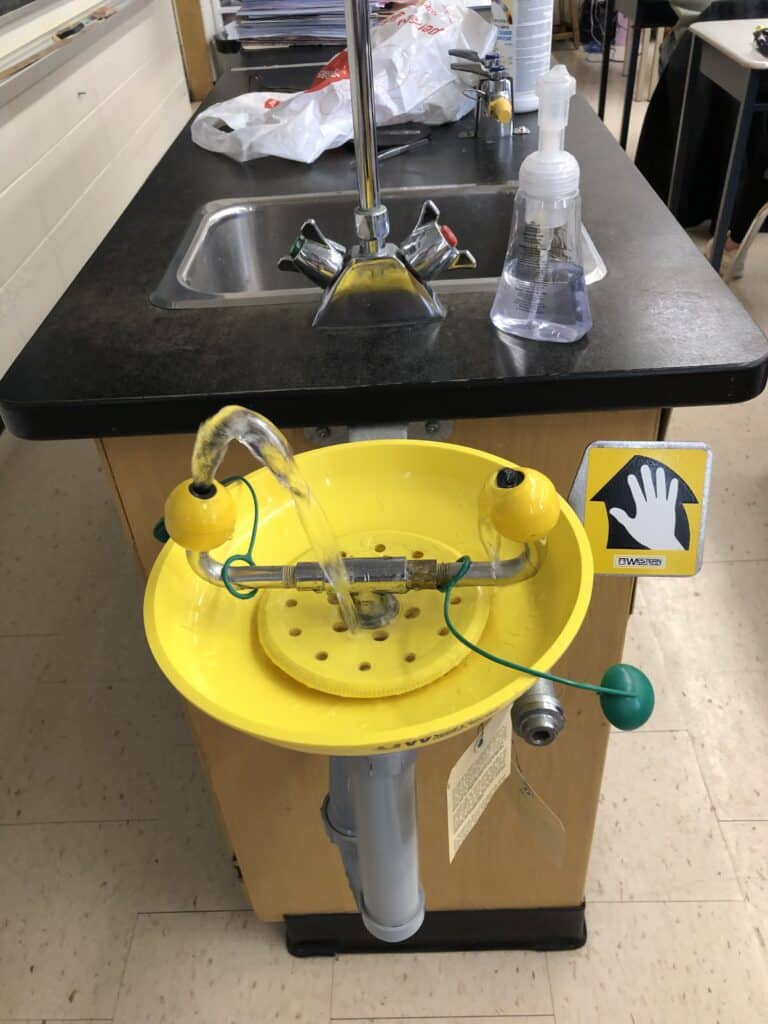
You’re in a busy middle school science lab.
Students are buzzing with excitement – baking soda, vinegar, goggles slightly askew.
Then, it happens. A splash. A gasp.
In that moment, one question matters more than any other:
Can that student reach the eye wash station in ten seconds or less?
Because the difference between a learning moment and a life-altering injury often comes down to access .
And here’s the truth:
If your students are using chemicals, liquids, glassware, or heat , every single person in that room, students and teachers alike, must wear indirectly vented ANSI/ISEA Z87.1 D3-2020 certified safety goggles .
No exceptions. No excuses.
Eye Wash Stations: The Unsung Heroes of Science Class
Safety in the lab isn’t just goggles and gloves.
It’s about engineering controls; those built-in, always-ready safeguards that protect everyone when the unexpected happens.
According to OSHA 29 CFR 1910.1450 and ANSI Z358.1 standards, emergency eye wash units must:
- Deliver a gentle, continuous stream of water for at least 15 minutes
- Be unobstructed and instantly accessible
- Be tested weekly to ensure they work when needed most
And yet… how often do we see this?
- Eye wash blocked by boxes.
- Backpacks piled in front.
- A station no one’s tested in months.
It’s a preventable hazard, from elementary to post-secondary labs.
Accessibility is Everything.
“You can have the best written safety plan in the world,” says James Palcik , NRCC-Certified Chemical Hygiene Officer and Co-Founder of Safer STEM , “but if a student or teacher can’t reach an eye wash within seconds, that plan fails in practice.”
At Safer STEM , we don’t see safety devices as optional equipment.
We see them as the infrastructure of care, the backbone of every thriving STEM classroom.
Through our Virtual CHO Program , safety inspections , and material audits , we help schools ensure that:
- Eye wash stations and emergency showers are properly installed
- Weekly testing logs are up to date
- Clear, unobstructed paths are maintained
- Teachers can teach with confidence, not fear
Building a Culture of Preparedness
Every working fixture, every clear pathway, every weekly test is a message to your students:
“We care enough to be ready.”
That’s how we build a culture where safety isn’t a checklist; it’s a shared value.
Where students learn that science is powerful, and so is responsibility .
At Safer STEM, we’re redefining what it means to make labs safer, not through fear, but through empowerment and education.
Because when we protect the people who explore, we protect the future of discovery itself.
Learn more about how Safer STEM helps make your STEM, CTE, and VAPA spaces safer at www.saferstem.com
Contact Safer STEM for a complimentary science safety audit, Chemical Hygiene Plan review, and safety-aligned training tools.
- Call Our Safety Specialists: 833-327-2337
- Email Us: support@saferstem.com
- Schedule a Free Consultation